
Celebrating Innovation
Planning for the Future: Energy Resources
Holland BPW conducts an Integrated Resource Plan (IRP) every 3-5 years. The IRP is a detailed study used for planning how we fulfill the energy needs of our community while considering changing influences like regulations and available technologies.
Our Obligation to Serve
As an electric service provider, Holland Board of Public Works has an obligation to serve customers with a sufficient supply of electricity that meets all their needs at any given time. The amount of electricity that our customers need at any given moment is known as demand. The utility needs to be prepared with sufficient resources to meet the community’s highest demand, or peak, whenever it may occur. Whether it’s early morning when businesses are opening, midday when manufacturers are ramping up production, or a hot afternoon when air conditioners are kicking on, the utility must be ready to serve that load. That preparedness comes with many costs and considerations.
In addition to reliability, we strive to maintain stable and affordable rates while meeting the environmental targets set by the community, state, and federal government. It takes careful long-term planning and responsive daily operations to ensure that we can power our community efficiently.
Managing Our Resources Wisely
Holland has been forward-thinking with a Community Energy Plan (CEP) that guides towards decisions that result in lowering the carbon emissions produced by our community. The CEP provides a framework of key initiatives for continuous improvement in the sustainability of our city. The original CEP was published in 2011. It is reviewed and revised every three years and continues to place a high priority on reducing Holland’s carbon footprint. Holland BPW has made successful contributions to our community’s progress towards achieving the CEP’s vision. When we replaced the James DeYoung coal plant with Holland Energy Park, we cut the carbon emissions rate for our electric portfolio in half. As we plan for our community’s electricity needs, we continue to strive for the CEP’s evolving vision.
As a baseline, 15% of our customers’ energy comes from renewable sources with the opportunity to elect up to 100% through our Renewable Energy Rate. In our pursuit to lower carbon emissions, as described in Holland’s Community Energy Plan, we also continue to strategically invest in new renewable energy resource additions to our portfolio. Through our partnership with the Michigan Public Power Association (MPPA), we regularly evaluate opportunities to participate in power purchase agreements for renewable generation.
The nature of renewable energy sources presents some limitations in how they can be applied to serve our community’s energy needs. Renewables like solar and wind do not provide a consistent, base-load supply of power like conventional thermal resources running off natural gas, coal, or nuclear fuel. However, improvements in technologies, like battery storage, could help mitigate this intermittency challenge.
The IRP helps us identify ways to cost effectively and reliably meet future demands. This includes identifying ways to increase the share of renewable energy resources in our portfolio while accounting for their unique operating characteristics. Engaging in an IRP process also gives us the opportunity to consider how new technologies could eventually benefit our customers, once they are available.
Navigating Change
Change adds another layer of complexity to solving how we supply our customers with the right amount of power. Changes affecting the electric industry are driven by economic development, laws, environmental needs, and societal thinking. The IRP gives us a look into the future and forecasts how our generation needs are expected to change over the next 25 years. It also models what resources are expected to be needed to achieve our goals amidst several potential constraints that we may have to navigate.
Our community is growing. In 2025, we serve 1,200 more electric customers than we did in 2024; 39 of those are businesses. In addition to new businesses, we have growing businesses whose electricity needs are also increasing. With our commitment to the CEP and the community’s involvement, Holland has been able to lower carbon emissions per capita even as industrial growth occurs. As we forecast the needs of the future, we predict that our customers will use more electricity than they do today. The IRP is a tool that helps guide our decisions to meet the growing needs while minimizing our impact on the environment.
Legislative and regulatory changes also impact how we can fulfill our obligation to serve. At the end of 2023, the State of Michigan signed a package of bills that established new requirements including a Renewable Energy Standard (RES) and Clean Energy Standard (CES), commonly known as “PA 235”. (Clean energy refers to sources that emit little or no carbon. Renewable resources of energy are those that are naturally replenished and emit little or no carbon.) This package of bills specifies energy mandates and narrowly defines how electric providers can compose their resource portfolios. The 20-year timeline for the rollout of the full requirements is another complex obstacle for Michigan’s electric providers to overcome.
PA 235: State of Michigan Mandates
The act requires that through 2029, electric utilities in Michigan retire a volume of Renewable Energy Certificates (RECs) equivalent to 15% of the utility’s total sales of electricity. RECs are a type of Environmental Attribute Certificate (EAC) that allows utilities, companies, and/or individuals to claim renewable energy. One REC is generated for every one megawatt-hour of renewable energy generated. The retirement of RECs thus allows utilities to demonstrate how much of the electricity they sold came from renewable energy.
In 2030, the requirement for renewable energy demonstration increases to 50%. This requirement increases again in 2035 to the ultimate mandate of 60%. Clean energy mandates also go into effect at that time, starting at 80% in 2035 and increasing to 100% in 2040.
Like all electric providers in Michigan, it will be challenging for Holland BPW to meet PA 235 as currently written. The siting, permitting, and construction of new power resources takes an extended amount of time. Additionally, the mandates have the potential to impact the utilization of existing resources like Holland Energy Park.
Holland Energy Park: Resource, Destination, Gateway
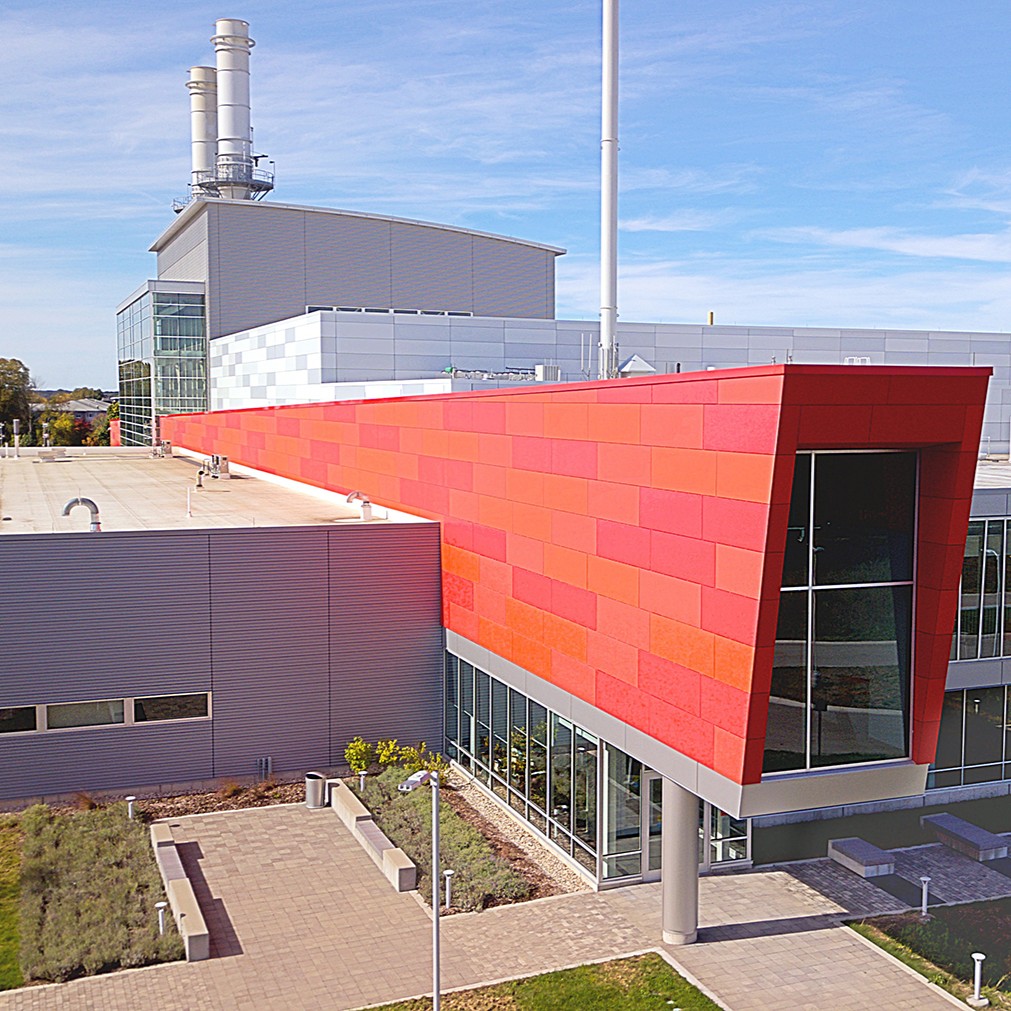
Holland Energy Park (HEP) is an efficient, modern, baseload power plant that our community depends on. HEP was built through a process of community engagement that resulted in a clear vision for Holland’s long-term needs and priorities. The people of Holland wanted their power plant to be a destination, resource, and a gateway for their community. The combined cycle natural gas plant maximizes efficiency and runs Downtown Holland’s esteemed snowmelt system. HEP is the first power plant to achieve the highest honors of ENVISION Platinum, a sustainable building standard that ensures environmental and social responsibility in infrastructure projects. The streamlined, modern aesthetic of the building is attractively positioned near the entry into Downtown Holland.
As a destination for learning and exploration, HEP has a ¾ mile walking trail open to the public and a museum-style Visitor Center that hosts field trips, tours, and events. HEP cut the carbon emissions in Holland BPW’s electric portfolio in half by replacing the James De Young coal plant with more efficient technology. The efficiency of HEP resulted in paying off its construction debt early, which led to two rate decreases for electric customers. HEP is a proven success and an important resource for our community.
The IRP process evaluated how to best leverage our investment in HEP in the future. HEP will continue to provide benefits to the community as a capacity resource. However, PA 235, as written, may challenge our ability to maximize its usage as an energy resource without extensive alterations to the plant.
IRP Results
This IRP looked at how different factors could impact our future needs. In our most recent IRP, we studied two scenarios.
- Scenario A – HBPW achieves the reduction in its emissions rate (measured in pounds of carbon dioxide equivalent per megawatt hour of power produced, or “CO2e/MWh”) prescribed by the Holland Community Energy Plan (CEP).
- Scenario B – HBPW achieves the reduction in emissions rate prescribed by the CEP and also complies with the requirements of the State of Michigan’s Renewable Energy Standard (RES) and Clean Energy Standard (CES), or “PA 235”.
Holland BPW is focused on near-term actions that we can take from our learnings of this IRP. The results of the IRP show some commonalities within all scenarios that help prioritize and inform decisions. To meet near-term demand growth and comply with Michigan’s new clean energy legislation, the IRP recommended significant additions of wind and solar to the utility’s electric portfolio in the coming decades. The intermittent nature of existing renewable resources will require Holland BPW to build a portfolio with an overall capacity well beyond forecasted peak demand to achieve PA235 and CES targets and ensure that energy is always available when it is needed.
Holland Energy Park and the 48th St. Peaking Facility will continue to serve as critical resources, maintaining reliability when the grid needs them and other assets aren’t producing power. New dispatchable technologies including natural gas generation with carbon capture and sequestration or battery storage were also advised to supplement renewables and ensure a well-balanced portfolio.